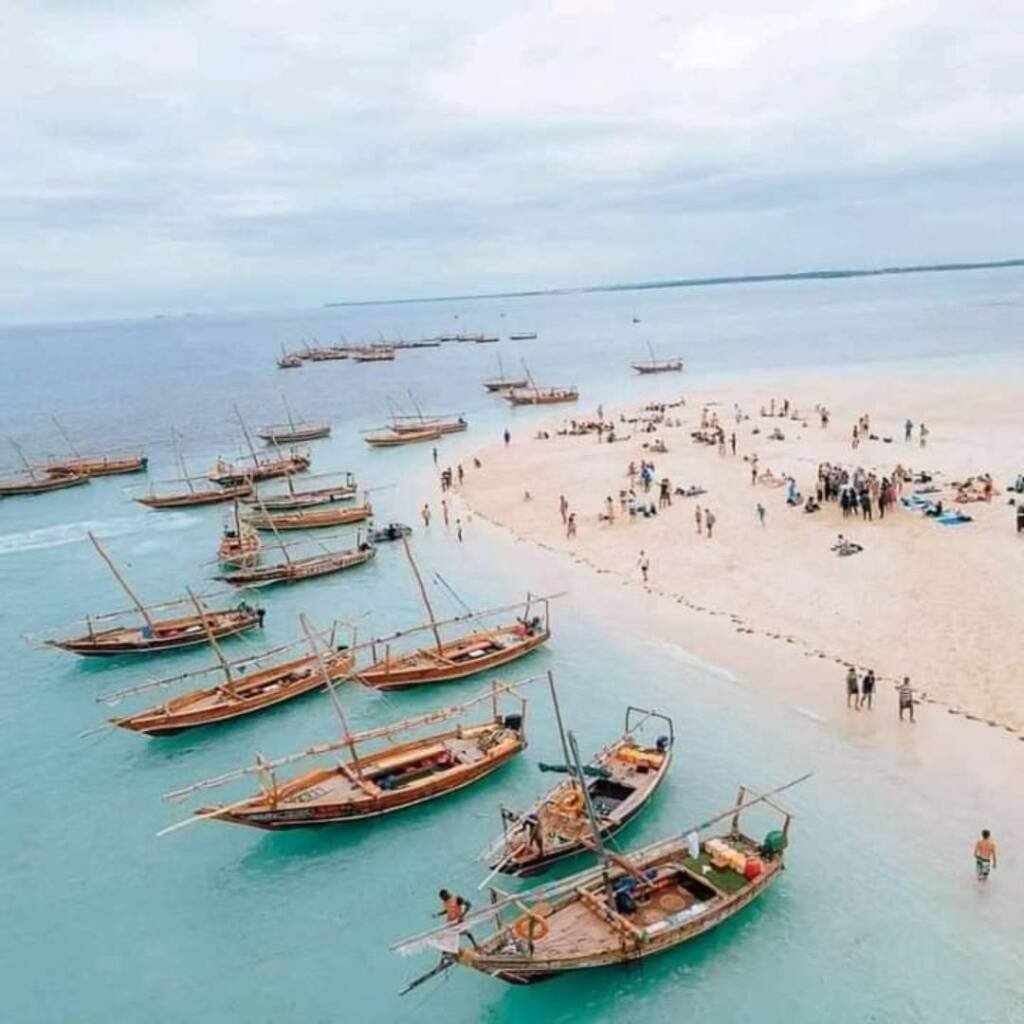
PEMBA ISLAND: AFRICA'S BEST-KEPT SECRET
Tanzania’s Green Island of World-Class Diving, Hidden Reefs, Ancient Culture & Untouched Paradise
There is an island north of Zanzibar that the world has somehow forgotten to discover — and that is precisely its greatest gift. Pemba Island, rising from the warm waters of the Indian Ocean just 56 kilometres off the East African coast, is what Zanzibar was half a century ago: raw, wild, unhurried, and staggeringly beautiful. Known in Arabic as Al Jazeera Al Khadra — The Green Island — Pemba is draped in rolling emerald hills, dense mangrove forests, cascading clove plantations, and a coastline of secret bays and sandbanks that have never felt the shadow of a beach umbrella from a chain resort.
While Zanzibar’s beaches fill with sunloungers and Stone Town welcomes cruise ships, Pemba sits quietly to the north, nurturing some of the healthiest coral walls on Earth, sheltering rare endemic wildlife, and hosting communities who still fish by dhow at dawn. For the traveller who wants not just a holiday but a real encounter — with ocean, with history, with culture, with self — Pemba Island is the answer that most people don’t yet know to ask for.
At Karibu Zanzibar Agency, based in Nungwi, we have made it our passion to bring the wonder of Pemba to every traveller who trusts us with their journey. This is your complete guide to everything Pemba offers — from its most famous dive walls to its most secret sandbanks, from ancient Swahili ruins to the mystical juju traditions that have made this island legendary.
THE ISLANDS OF PEMBA — POPULAR, HIDDEN & BREATHTAKING
Pemba itself is the main island, but it is surrounded by a constellation of smaller islands, islets, and sandbanks — each one a different chapter in the same extraordinary story.
Misali Island (Mesali Island) — The Crown Jewel
Uninhabited, protected as a marine conservation area, and achingly beautiful — Misali is Pemba’s most iconic offshore island. Located off the west coast, its waters shift from vivid turquoise in the shallows to a profound indigo blue where the reef drops away. The conservation area is home to over 350 species of fish and 40 species of coral. Misali is a critical nesting ground for endangered green and hawksbill sea turtles, and its shallow coral gardens — filled with giant sea fans, parrotfish, butterflyfish, and resident octopus — are considered among the finest snorkeling environments in the entire Indian Ocean. A lighthouse perched on the island’s northern tip offers unobstructed views to the horizon. A visit to Misali is not a tour — it is a pilgrimage.
Vumawimbi Beach & Kigomasha Peninsula — The Hidden North
Tucked into the northwestern corner of Pemba, Vumawimbi Beach is widely regarded as the island’s most spectacular stretch of sand — and one of the least visited in the entire Zanzibar Archipelago. A long arc of powder-white shoreline bordered by Ngezi Forest to the south, it is accessible only by boat or a journey through the forest tracks, which only makes it more magical. The crystal waters here are ideal for swimming, and the offshore reefs are outstanding for snorkeling. This is the beach where you will hear only the ocean.
Kokota Island — Reforestation & Secret Reef
A small offshore islet celebrated not only for its beauty but for its remarkable community-led reforestation success story. Kokota’s surrounding reefs are largely unexplored by mainstream tourism, offering snorkelers and divers an almost virgin underwater landscape. Sandbanks shift seasonally around Kokota, appearing and disappearing with the tides — creating temporary paradise islands that exist only for those lucky enough to visit at the right moment.
Ras Mkumbuu Peninsula — History Meets the Sea
A 12-kilometre narrow limestone finger stretching westward into the Indian Ocean, Ras Mkumbuu is both a geological wonder and a living museum. At its tip lie the ruins of Qanbalu — one of East Africa’s earliest recorded settlements, dating from the 13th–14th centuries, with a mosque that was once the largest structure of its kind in sub-Saharan Africa. The calm waters around the peninsula are excellent for fishing, snorkeling, and photography, while the drama of the landscape — limestone cliffs, mangroves, and open ocean — is unlike anything else on the island.
Fundu Lagoon & Hidden Sandbanks — Nature’s Shifting Artwork
Along the southwestern shore, Fundu Lagoon is where jungle presses against the sea in a spectacular collision of ecosystems. The area is only accessible by boat, lending it an exclusivity that feels almost surreal. Surrounding this stretch are tidal sandbanks that rise from the ocean during low tide — brilliant white platforms surrounded by warm, shallow turquoise water — perfect for picnics, sundowners, and private snorkeling sessions. Njao Gap and the Fundu Gap are nearby dive highlights of international renown.
WORLD-CLASS SCUBA DIVING — WHERE WALLS DROP INTO THE ABYSS
Divers who arrive at Pemba often speak of it with reverence typically reserved for the Maldives or the Great Barrier Reef. The Pemba Channel — a deep-water passage running along the western coast — acts as a nutrient superhighway, feeding the island’s reefs with upwellings of cold, life-giving water and sustaining one of the most biodiverse marine ecosystems in the Indian Ocean. The result is coral walls of extraordinary health, visibility that can exceed 30 metres, and marine encounters that stop divers mid-descent in sheer disbelief.
Top Dive Sites on Pemba Island
- The House Reef: A shallow, accessible reef ideal for beginners and night dives, located approximately 1.5 km from shore. Abundant with reef fish, nudibranchs, and juvenile marine life — a perfect introduction to Pemba’s underwater world.
- Swiss Reef: An advanced drift dive experience along underwater mountains and canyon systems approximately 10 km offshore. The topography is dramatic, the currents exciting, and the encounters with larger pelagic species — including reef sharks — are frequent.
- The Pemba Channel Wall Dives: Dramatic vertical walls plunging from 12 metres to beyond 50 metres, encrusted with sea fans, black coral, and soft coral forests in vivid orange and purple. Manta rays, Napoleon wrasse, hawksbill turtles, and barracuda are regular companions.
- Njao Gap: A renowned channel dive where the current funnels nutrients and draws spectacular concentrations of marine life. Big fish, big walls, and the kind of visibility that makes underwater photographers weep with joy.
- Fundu Gap: Neighbouring Njao Gap and equally spectacular, the Fundu Gap is a favourite of experienced divers for its dramatic topography and outstanding coral health.
- Misali Island Dive Sites: The western and southern edges of Misali drop into pristine coral gardens and walls accessible to all experience levels. Look for lionfish, moray eels, pufferfish, and hawksbill turtles resting on coral bommies.
- East & South Coast Sites (Advanced): Less explored and holding the most potential for discovery, the eastern and southern coasts of Pemba are for experienced divers seeking truly uncharted territory. The marine encounters here are wilder, the reefs less visited, and the possibility of first encounters entirely real.
- Night Dives: Pemba’s reefs transform after dark — octopus hunt, crustaceans emerge from crevices, and bioluminescent plankton light the water around every fin kick. Night diving at Pemba is a transformative experience.
Between October and April, the Pemba Channel also attracts whale sharks and manta rays following the warm current, while bottlenose and spinner dolphins are year-round residents. Resident species visible throughout the year include sea turtles, hammerhead sharks, reef sharks, giant moray eels, Napoleon wrasse, barracuda, and an extraordinary diversity of nudibranch species that draw macro photographers from across the world.
SNORKELING PARADISE — FOR EVERY LEVEL, EVERY AGE
You do not need a scuba tank to experience Pemba’s magic. The island’s shallow coral gardens are among the most colourful and pristine in East Africa, and snorkeling here feels less like a tourist activity and more like a private audience with the ocean. The water is remarkably clear — sometimes exceeding 30 metres visibility — and warm year-round (24–30°C), making extended sessions effortless.
Best Snorkeling Spots on Pemba Island
- Misali Island Coral Gardens: The undisputed king of Pemba snorkeling. Shallow gardens of hard and soft coral, enormous sea fans, and a fish population so dense that you float inside moving clouds of parrotfish, angelfish, and surgeonfish. Conservation area status means the marine life here is remarkably undisturbed.
- Vumawimbi Shallow Reefs: The offshore reefs fronting Vumawimbi Beach offer tranquil, clear snorkeling with resident turtles and a remarkable variety of reef fish. With no other tourists for kilometres, the feeling is incomparable.
- Kigomasha Peninsula Fringing Reef: The reefs wrapping around the northwestern peninsula are well-protected from swells and accessible from shore. Excellent for families and beginners, with dense fish populations and healthy coral.
- Fundu Lagoon Reefs: The protected waters around Fundu Lagoon host some of the most accessible snorkeling on the island — brilliant for guests based in the area and a regular feature of day excursions from Karibu Zanzibar Agency.
- Tidal Sandbank Snorkeling: Several sandbanks around Pemba’s coast are surrounded by shallow reef systems that can be snorkeled from the sandbank itself at low tide — a genuinely surreal experience of hovering over coral with dry sand just metres away.
- Ras Mkumbuu Coastal Reef: The calm protected waters on the southern side of the Ras Mkumbuu peninsula offer excellent snorkeling with the bonus of spectacular scenery and immediate access to the archaeological ruins.
- Chwaka Bay Mangrove Edges: Where the mangroves meet the open sea, the water becomes a nursery for juvenile fish species and a foraging ground for sea turtles. Snorkeling these transitional zones reveals species found nowhere else on the island.
DEEP-SEA FISHING — BIG GAME IN THE PEMBA CHANNEL
The Pemba Channel is one of East Africa’s premier deep-sea fishing grounds, and among big game fishing aficionados it has been whispered about for decades. The channel drops to extraordinary depths, creating a thermocline that concentrates baitfish and attracts the pelagic hunters that follow them — sailfish, marlin, swordfish, wahoo, yellowfin tuna, and the prized dorado (mahi-mahi).
Traditional fishing by handline and dhow alongside local Pemba fishermen is also available — a completely different experience that connects you to centuries of Swahili maritime culture. Catch-and-release options are offered by responsible operators. The experience of heading out to sea before dawn in a local outrigger, pulling fish as the sun rises over the Indian Ocean, and returning to a beach breakfast of fresh-grilled catch is something that does not exist anywhere else on Earth in quite the same way.
Game fish species regularly encountered include: Sailfish, Blue Marlin, Striped Marlin, Swordfish, Wahoo, Yellowfin Tuna, Dorado (Mahi-Mahi), Giant Trevally (GT), Kingfish, Barracuda, and Billfish. The peak fishing season runs October through April, coinciding with the northeast monsoon.
LAGOONS, SANDBANKS & SECRET COVES — PEMBA’S LIQUID ARTWORK
Pemba’s coastline is not a smooth, resort-ready shore. It is a complex, dramatic, endlessly surprising geography of deep-cut bays, mangrove-lined inlets, tidal lagoons, and sandbanks that appear and disappear with the rhythm of the moon. This is what makes exploring Pemba by boat such a profound pleasure — you never know quite what extraordinary discovery awaits around the next headland.
- Fundu Lagoon: Where the southwest coast’s mangrove forest meets open sea in a bay of extraordinary natural beauty. Accessible only by boat, the lagoon is encircled by jungle hills dropping to the waterline — one of the most dramatic coastal settings in Tanzania.
- Chwaka Bay: A broad, protected bay ideal for kayaking through the mangrove channels. The waterways here meander for kilometres through an ancient forest ecosystem, alive with kingfishers, herons, hornbills, and crabs. The bay’s hidden interior is one of Pemba’s great kayaking adventures.
- Wete Bay & Harbour: The northern town of Wete sits on a sheltered bay with a working harbour of local fishing dhows. The bay’s shallow edges are ideal for gentle swimming and the dhow harbour scene is one of the most authentic in the archipelago.
- Tidal Sandbanks (Various Locations): Pemba’s west and southwest coast generates a series of tidal sandbanks that emerge fully from the sea at low tide — brilliant white against the turquoise water. These include sandbanks off Kigomasha, near Fundu, and around Misali. A private sandbank picnic here, with snorkeling and cold drinks, is the definition of Indian Ocean perfection.
- Kojani Island Mangrove Lagoon: A lesser-known island on Pemba’s east coast, Kojani is surrounded by extensive mangrove systems forming labyrinthine lagoons perfect for kayaking and birdwatching. Rare shorebirds and marine turtles are regularly spotted here.
- Panza Island Bay: Located at Pemba’s southern tip, Panza Island’s protected bay offers calm water, excellent visibility snorkeling, and remarkable serenity. Almost never visited by organized tours, it represents the true meaning of off-the-beaten-path.
WATER SPORTS & MARINE ACTIVITIES — EVERY WAY TO MEET THE OCEAN
- Dhow Sunset Cruise: Sail the waters of Pemba in a traditional hand-carved wooden dhow as the sun sinks beneath the Indian Ocean horizon. With a cold drink in hand, the silhouette of Pemba’s lush hills behind you, and the colours of the sky reflected in perfectly still water, this is the single most romantic experience the island offers.
- Kayaking the Mangroves: Paddle through the ancient mangrove forests lining Chwaka Bay, Kojani Island, and the Kigomasha Peninsula. These ecosystems are nurseries for marine life and havens for birdlife — a completely different Pemba to the reef world offshore.
- Dolphin Watching: The Pemba Channel is home to large populations of bottlenose and spinner dolphins that frequently approach boats. Dedicated dolphin-watching excursions are available, and snorkeling alongside them in the open water is an unforgettable experience.
- Whale Shark Snorkeling (Seasonal): Between October and April, the Pemba Channel attracts whale sharks following the current. Snorkeling alongside the world’s largest fish in clear open water, with Pemba’s hills visible on the horizon, is one of East Africa’s great wildlife encounters.
- Kite Surfing: The consistent trade winds of the northeast monsoon (October–March) make Pemba’s open beaches excellent for kitesurfing — particularly along the north coast. Equipment and lessons are available through specialist operators.
- Stand-Up Paddleboarding (SUP): The calm lagoon waters and protected bays of Pemba’s west coast are ideal for SUP exploration. Several resorts and tour operators provide boards for guided morning sessions over the coral.
- Swimming with Sea Turtles: Pemba’s waters host populations of green and hawksbill sea turtles year-round. Both Misali Island and the coastal reefs around Vumawimbi regularly offer encounters while snorkeling — completely natural and unscripted.
- Seaweed Farm Visits & Boat Tours: Pemba’s women-run seaweed farms, visible along the shoreline at low tide, form a fascinating part of the island’s coastal economy. Short boat excursions to observe the farming process and meet the farmers are a meaningful cultural and marine activity combined.
CULTURAL TOURS & HISTORICAL EXCURSIONS — A CIVILISATION IN THE SEA
Pemba has been inhabited for over 1,400 years. Arab traders arrived in the 9th century, the Shirazi Persians shaped its early Islamic culture, Omani sultans left their architectural marks, and the island’s own Swahili identity grew rich and independent across centuries of maritime trade. Today, Pemba’s cultural heritage is written in ruins, mosques, spice farms, traditional villages, and a people of extraordinary warmth and depth.
- Ras Mkumbuu Ruins Tour: A guided walk along the 12km peninsula to Pemba’s most significant archaeological site — the ruins of Qanbalu (13th–14th century), featuring a mosque that was once the largest in sub-Saharan Africa, ancient tombs, coral stone houses, and sweeping ocean views. Combined with a boat transfer, this is one of Pemba’s finest half-day tours.
- Pujini Ruins (Mkame Ndume): Located 10km southeast of Chake Chake near Chambani village, the Pujini Ruins are the remains of a 15th-century Afro-Shirazi fortified town — the only known fortification on the entire Swahili coast. The 5-metre-high moated ramparts, underground chamber, and two-storey reception hall (46m × 8m) are extraordinary surviving structures. A guide’s storytelling here transforms ruins into living history.
- Chakawa Ruins: The remains of an 11th–15th century town that provide insight into Pemba’s earliest urban settlements and its position on the Indian Ocean trade network. Less visited than Pujini or Ras Mkumbuu — and all the more fascinating for it.
- Shirazi Mosque Ruins: Dating to the 12th century, these ruins represent some of the earliest Islamic architecture on the island, featuring intricately carved mihrabs (prayer niches) and calligraphic inscriptions that speak of Pemba’s deep and centuries-long connection to Islamic faith.
- Pemba Museum, Chake Chake: The island’s main museum, housed in the old fort in the island capital, provides context for all of Pemba’s historical and cultural sites. An essential first stop before exploring the ruins, it chronicles the island’s journey from ancient settlement to clove empire.
- Clove Spice Farm Tours: Pemba produces more cloves than any other island on Earth — approximately 70% of Tanzania’s entire output comes from this single island. Farm tours walk visitors through working clove plantations, demonstrating harvesting, drying, and processing techniques. Visits to the ZSTC Clove Oil Distillery in Chake Chake show how cloves become the essential oils and spice exports that travel the world.
- Traditional Village Tours (Wete, Mkoani, Chake Chake): Walking tours of Pemba’s main towns and rural villages provide an unfiltered window into Swahili island life — morning markets, dhow workshops, local schools, coral-stone architecture, and the unhurried rhythms of a community largely untouched by mass tourism. Meeting Pemba’s people is often cited by visitors as the most memorable part of their journey.
- Juju & Traditional Medicine Heritage Tour: Pemba has been renowned for centuries across East Africa as the centre of powerful traditional medicine and juju (spiritual healing) practices. This unique cultural identity sets Pemba apart from every other island in the archipelago. Sensitively guided tours provide cultural context for these traditions without intrusion, exploring the island’s reputation as the ‘magic island’ of the Indian Ocean.
- Ngezi Forest Reserve Nature Walk & Wildlife Tour: The last remaining indigenous forest in the Zanzibar Archipelago, Ngezi is a UNESCO-protected reserve of extraordinary biodiversity. Guided forest walks reveal the rare Pemba Flying Fox (a giant fruit bat endemic to this island alone), the Pemba Scops Owl, the Pemba Sunbird, the African Pitta, and the elusive Red Colobus Monkey. Medicinal plant identification with a knowledgeable local guide adds a fascinating ethnobotanical dimension.
- Kidike Flying Fox Sanctuary: Located 2km from Kangagani village northeast of Chake Chake, the Kidike Sanctuary is a dedicated conservation site for the Pemba Flying Fox — a critically important endemic species found nowhere else in the world. At dusk, watching thousands of these huge fruit bats take flight from their forest roost against the colours of the Pemba sky is one of the island’s most arresting wildlife spectacles.
- Local Market Immersion (Chake Chake, Mkoani, Wete): Pemba’s markets are alive with fresh fish brought in by dawn dhow fleets, enormous clove hauls, tropical fruits, handwoven baskets, and the social life of an island community. Spending an hour in one of these markets with a knowledgeable local guide is a sensory and human experience that no beach resort can provide.
WHAT MAKES PEMBA DIFFERENT FROM EVERY OTHER ISLAND
The world has many beautiful islands. What makes Pemba not just beautiful but extraordinary is a combination of factors that are very difficult to find anywhere else simultaneously:
- Unspoiled Marine Ecosystems: Conservation programs running since 2006 have protected Pemba’s reefs from the bleaching and over-fishing that has damaged so many Indian Ocean destinations. The coral health here is genuinely exceptional — hard corals that would take decades to grow elsewhere thrive in abundance.
- Zero Mass Tourism: While Zanzibar welcomed over half a million visitors in recent years, Pemba receives a tiny fraction of that number. This means pristine beaches without crowds, dive sites without other boats, and cultural encounters without artifice. Pemba offers the authentic Africa that most visitors dream of but rarely find.
- The World’s Clove Capital: Pemba produces 70% of Tanzania’s clove output and a significant share of the world’s supply. The scent of cloves drifts across the entire island. This is a living, breathing economic and cultural reality unlike anything in mass tourism.
- Endemic Species Found Nowhere on Earth: The Pemba Flying Fox, Pemba Scops Owl, Pemba Sunbird, and Pemba White-eye are found nowhere else in the world. This level of endemism is extraordinary for an island of this size and makes Pemba a genuinely world-class biodiversity destination.
- Ancient Swahili Heritage Intact: Pemba’s ruins represent 1,400 years of continuous civilization — Shirazi, Omani, Arab, and indigenous Swahili cultures layered one upon another. Unlike many historical sites that are sanitised for tourism, Pemba’s ruins still feel discovered rather than presented.
- The Mystique of the ‘Magic Island’: No other destination in the Indian Ocean carries Pemba’s legendary reputation for juju and traditional healing arts. This cultural identity is genuine, centuries-deep, and entirely unique in the tourism landscape.
- Genuine Community Life: With over 500,000 people living on the island, Pemba has a real, functioning society of farmers, fishermen, teachers, and traders. Walking into a village on Pemba, the community comes alive — curious, welcoming, and entirely unperformed.
BEST TIME TO VISIT & HOW TO GET THERE
Best Season:
- June – October (Dry Season): Peak time for diving and snorkeling. Clear skies, calm seas, excellent visibility (20–35m), pleasant temperatures. The island’s most popular period — though ‘popular’ on Pemba is still incomparably quiet.
- October – April (Warm Season & Big Pelagics): Whale shark and manta ray season. Warmer water (up to 30°C). Ideal for fishing and dolphin encounters. Short rains in November–December bring lush green landscapes.
- March – May (Long Rains — Avoid): The main rainy season brings heavy downpours. Many resorts close. Visibility drops and travel becomes challenging.
Getting There:
By Air: Pemba Airport (PMA) receives daily flights from Zanzibar’s Abeid Amani Karume International Airport and Dar es Salaam’s Julius Nyerere International Airport via Auric Air and Coastal Aviation. Flight time from Zanzibar: approximately 30 minutes. By Ferry: Ferries operate from Zanzibar (Unguja) though sea conditions can be challenging — always use a reputable operator. Karibu Zanzibar Agency can coordinate all transfers, flights, and connections for a seamless journey.
KARIBU ZANZIBAR AGENCY — YOUR GATEWAY TO PEMBA
We are a Nungwi-based agency with deep roots in the Zanzibar Archipelago, a genuine love for these islands, and the knowledge, connections, and expertise to craft a Pemba experience that exceeds every expectation. Whether you come for the diving, the culture, the beaches, or simply the rare gift of a place the world hasn’t yet found — we will build your journey with care, with honesty, and with the passion of people who have made these islands their home.
Pemba is waiting. The question is: are you ready?
📍 Karibu Zanzibar Agency | Nungwi, Zanzibar, Tanzania